



SOLD OUT
Einstein in Oxford: Thinking in Music
An evening of music and conversation
5.45 pm Doors open
6.00 pm Music and conversation inspired by Einstein's life and legacy
6.50 pm Q & A with the audience
7.15 pm Drinks reception
Einstein’s love of music made him see the world differently. He once said that he often thought in music.
Andrew Robinson’s book Einstein in Oxford encapsulates this rich complexity: the scientific genius who loved playing his violin; the logical mind who saw the inner beauty of the universe in Mozart’s music but mocked Oxford’s ceremonial splendour; the celebrity who spurned the trappings of fame.
Music inspired Einstein's thinking 100 years ago, but how does his scientific legacy inspire musicians and researchers today?
Join our panel - Andrew Robinson, Professor Brian Foster and Professor Roger Davies - for an evening of conversation and music to discuss:
- What does Einstein’s relationship with music uncover about his approach to science?
- What is the impact of Einstein’s intuitive thinking on science today?
- How does Einstein's scientific legacy continue to drive groundbreaking research?
- How can Einstein’s scientific ideas inspire musicians today?
Throughout the discussions, musicians Zakiya Leeming and Linda Jankowska will share three miniatures for violin composed for this event and inspired by conversations with our panelists.
I often think in music. I live my daydreams in music. I see my life in terms of music ... I get most joy in life out of my violin.
Albert Einstein
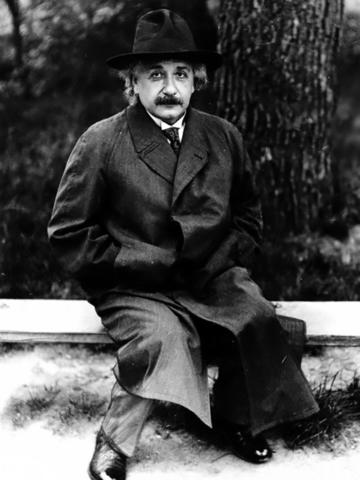
Albert Einstein on a walk in Oxford, early 1930s
The greatest scientists are artists as well.
Albert Einstein
SOLD OUT
Meet the panel
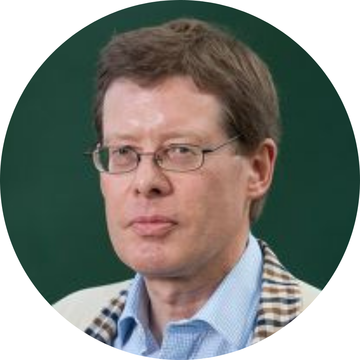
Andrew Robinson
Andrew Robinson has written some twenty-five books on the arts and sciences, including three on Albert Einstein (Einstein: A Hundred Years of Relativity, Einstein on the Run and Einstein in Oxford) as well as articles and reviews on Einstein for leading magazines and newspapers including Nature and Science, and Genius: A Very Short Introduction.
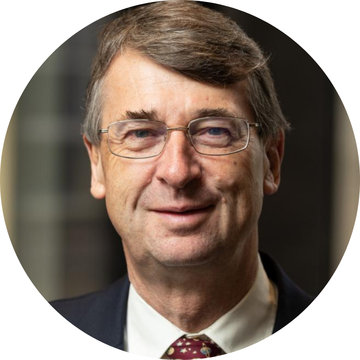
Professor Roger Davies
Professor Roger Davies is an Emeritus Professor of Astrophysics and was the first holder of Philip Wetton Chair in Astrophysics. His research interests centre on cosmology and how galaxies form and evolve. He pioneered the use of a new class of astronomical spectrograph to measure the masses, composition and ages of galaxies, as well as search for black holes in their nuclei. From 2014-2022, he was the founding Director of the Oxford Hintze Centre for Astrophysical Surveys. He has served as President of the Royal Astronomical Society and European Astronomical Society.
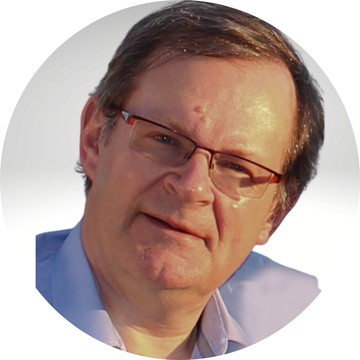
Professor Brian Foster OBE
Professor Brian Foster OBE is Emeritus Donald H. Perkins Professor of Experimental Physics at the University of Oxford. He is known for his pioneering work in high-energy particle physics and his major contributions to the study of elementary particles such as heavy quarks and leptons. He was European Director of the global design effort for the International Linear Collider — a next-generation particle collider designed to unlock the secrets of our Universe. Brian is a firm believer in popularising physics. In addition to writing widely in newspapers and magazines, he presents the lecture series Einstein’s Universe and Superstrings, which combine his love of science and music and is author of Einstein: A Life in Science and Music.

Zakiya Leeming
Zakiya Leeming is an experimental composer creating work at the intersection of science, medicine, and human experience. She creates music for concerts, opera, digital media and emerging technologies and is the PRiSM Associate Composer at the Royal Northern College of Music's (RNCM) Centre for Practice and Research in Science and Music (PRiSM). Her work is often shaped by the human stories behind science, medicine, and new tools. She composed the three miniatures for this event in collaboration with the three panellists: Andrew Robinson, Professor Roger Davies and Professor Brian Foster OBE.
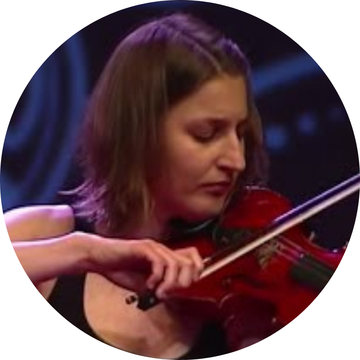
Linda Jankowska
Linda Jankowska is a musician whose artistic practice orbits around long-term collaborations and multifaceted modes of working with sound that stretch her limitations. Primarily a violinist, she works at an intersection of contemporary instrumental performance, improvisation and composition. She is also an active concert producer, contemporary performance researcher and educator. Linda is a founding member of Distractfold Ensemble and served as its co-artistic director in the years 2016-2025.
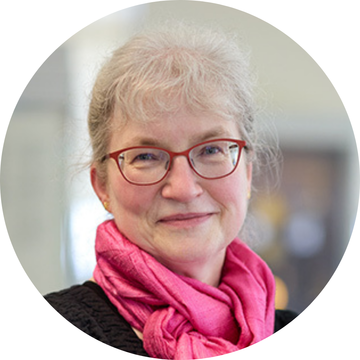
Dr Silke Ackermann
Dr Silke Ackermann (Chair) is Director of the History of Science Museum, University of Oxford. She worked at the British Museum for 16 years before taking up a professorship at a private university in Germany. In 2014 she returned to the UK to join the History of Science Museum as the first ever female museum director at the University of Oxford.
This event is supported by a generous donation from Fondazione Vismederi.
SOLD OUT

