

Multaka-Oxford
What is MultakaOxford?
Mutual learning and benefit are at the heart of everything we do
Nicola Bird, Multaka Project Manager
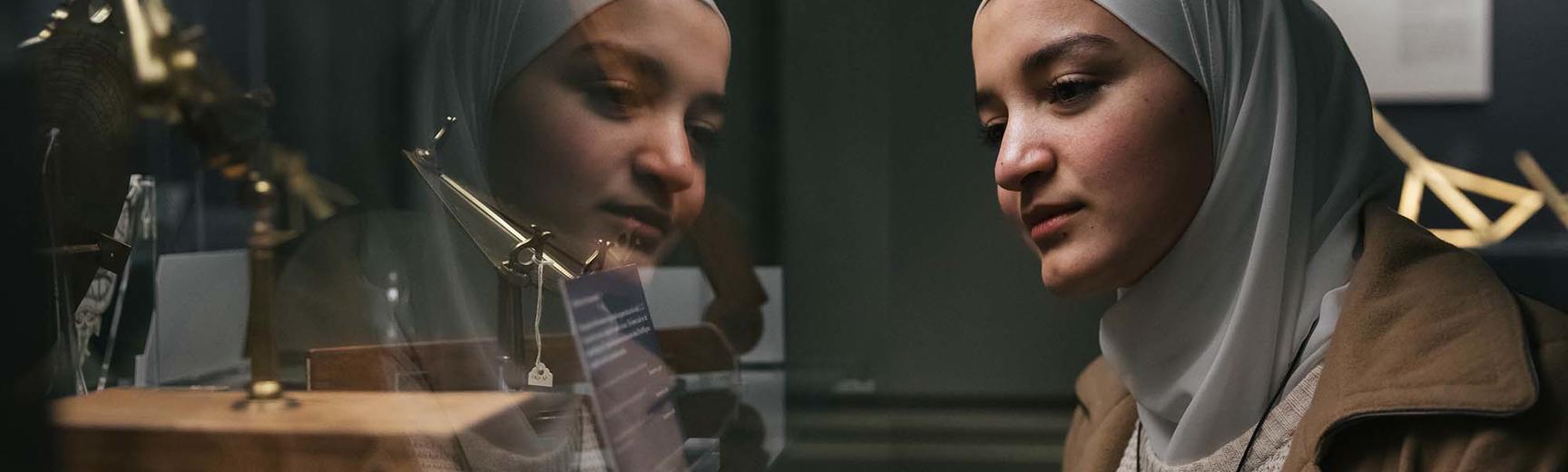
The award-winning MultakaOxford team brings communities together by sharing the rich knowledge and heritage of people from all over the world who have made their home in Oxfordshire.
Funded by a generous donation from Alwaleed Philanthropies, Multaka – which means meeting point in Arabic – is based at Oxford University's History of Science Museum and Pitt Rivers Museum.
https://www.youtube.com/embed/pnYDyUG-nNE
We believe in exploring the histories in our collections through the mutual sharing of science, art, stories and culture.
By collaborating with open hearts and minds, we discover exciting opportunities for research, learning, creativity and development.
Want to find out more and join MultakaOxford?
Email us at nicola.bird@museums.ox.ac.uk
An international philanthropic organisation collaborating with a range of philanthropic, governmental, and educational organisations across 189 countries to combat poverty, empower women and youth, develop communities, provide disaster relief, and create cultural understanding through education.
For the last 40 years, their work has sought to innovate and foster a new meaning of peace and inclusiveness through education, art, and conversational exchange between communities.
For more about Multaka-Oxford and the generous support of Alwaleed Philanthropies, read our press release.
The history of MultakaOxford
The MultakaOxford team first formed in 2018 with the support of the Esmée Fairbairn Collections Fund.
In 2021 MultakaOxford received landmark funding from Alwaleed Philanthropies, allowing us to create an ambitious 5-year plan.


What do we do?

Awards and partners
MultakaOxford is already highly regarded in the museums, arts, and heritage sector, having won the 2024 Museums + Heritage Award for Community Engagement Programme of the Year and the prestigious 2019 Collections Trust Award.
WINNER
Museum + Heritage Community Engagement Programme of the Year 2024
MultakaOxford Project Manager and Volunteer Coordinator Nicola Bird writes:
'MultakaOxford is an experience which includes everyone — staff, volunteers and the public.
Gently, with openness and warmth, it is a journey we all take together where we have different — but equally important — roles to play. MultakaOxford shows how we can live and work together: we are a part of a bigger story as we discover our shared humanity."
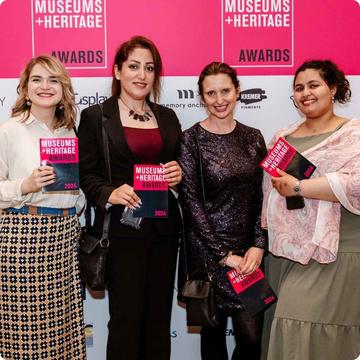
Museums + Heritage Awards 2024 Multaka Oxford: Winners of the Community Engagement Programme of the Year Award
WINNER
Vice-Chancellor's Diversity Award for Diversifying Participation 2020
MultakaOxford won the Vice-Chancellor's Diversity Award for Diversifying Participation 2020 at the University of Oxford.
Vice-Chancellor Professor Louise Richardson writes:
'The University is deeply committed to promoting equality and diversity in the workplace and to providing a welcoming and inclusive environment for all members of our community ... The awards recognise and celebrate these pioneering initiatives and the people behind them.'
One our our Multaka volunteers shared her experiences: 'When I came to the History of Science Museum I found these objects here from the Islamic world ... I was so happy and I feel so pleased when I show people these are from my country."
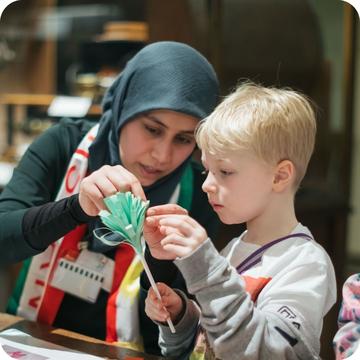
MultakaOxford volunteer working with a young child at an event
WINNER
Collections Trust Award 2019
The MultakaOxford Team won the 2019 Collections Trust Award recognising the often unsung achievements museum collections managers.
Rachel Harrison, Volunteer & Community Engagement Coordinator, writes:
‘Working with the volunteers has transformed our practice. It’s made us reflect on how we can be more inclusive in everything we do.’
The project provides on-the-job training, work experience — and a sense of inclusion and community.
Abdullah AlKhalaf, a Syrian volunteer, told us: ‘Here at the museum, we see we share a human history and culture. We see we are similar. The museum really is a 'multaka' — a meeting point for culture.’

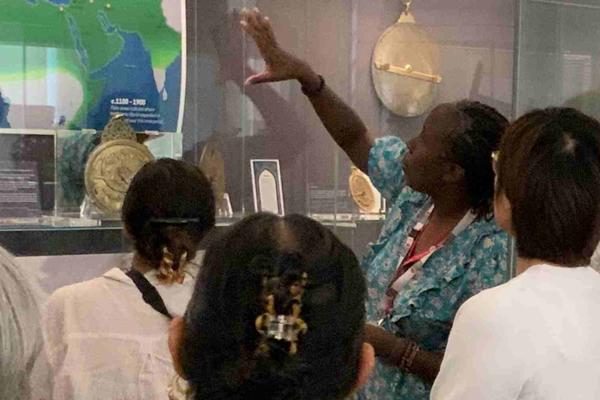
Visitor viewing display
More Awards for MultakaOxford in 2019:

Our stories
Meet Ali Solhi
When I was in my own country, I spent most of my life in the university, researching and writing articles. I am now interested in researching different subjects and topics.
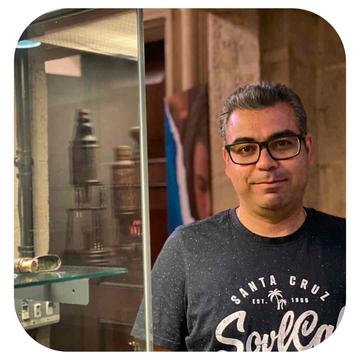
MultakaOxford volunteer Ali
In 2023, Ali Solhi took part in a MultakaOxford research group.
He chose to study the Lucernal and Solar Microscope by George Adams, London, c. 1790 (Inv no.: 67792).
Ali shared his findings:
"I chose this microscope by George Adams because I have already studied biology at university in my country Iran and I am very eager to know more about the history of the development of microscopes.
"George Adams was an English scientist, optician and scientific writer during the reign of king George lll. George Adams wrote many articles on electricity, magnetism, astronomy, geography and mathematical instruments.
"George Adams invented the lucernal microscope in 1770. It is a type of projection microscope where the image is projected on a screen by a large oil lamp.
"Adams designed and built a number of lucernal microscopes with wooden and brass bodies. Some microscopes were very large and they had a dense lens that was more than 8 inches in diameter and their focal angle was near 24 inches.
I am interested in group work and can learn a lot from others.
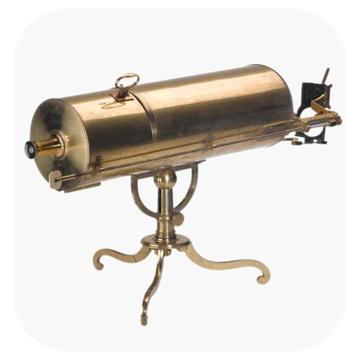
Lucernal and Solar Microscope by George Adams, London, c. 1790 (Inv no.: 67792)
"The MultakaOxford project was very enjoyable for me because there are many expert teachers in these activities and I am interested in group work and can learn a lot from others.
"It is also very useful to develop my English.
"When I was in my own county, I spent most of my life in the university, researching and writing articles, I am now interested in researching different subjects and topics.
I will definitely continue to research objects in the future.
Meet Mariia Korol
To me, these two objects show how strong and brave we must be to defend what we believe.
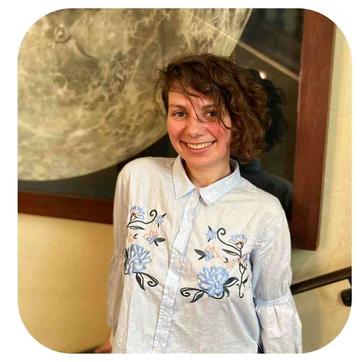
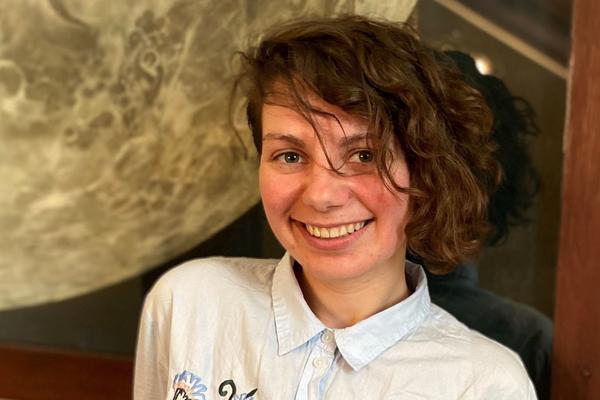
Mariia, MultakaOxford volunteer and tour guide at the History of Science Museum, standing next to John Russell's Moon Pastel (Inv. no.: 39338)
My name is Mariia.
I'm volunteering in the History of Science Museum as a tour guide, part of the MultakaOxford project.
The Copernican Armillary Sphere and the Moon Drawing on the stairs are the objects which most excited me and the reason I visited museum again and again.
In fact, the reason why I'm giving tours.
To me, these two objects show how strong and brave we must be to defend what we believe.
The Copernican Armillary Sphere (c.1700) shows a good example of how one person and his interests and beliefs can change whole world and development scientific philosophy.
This object represents a revolution in the scientific world.
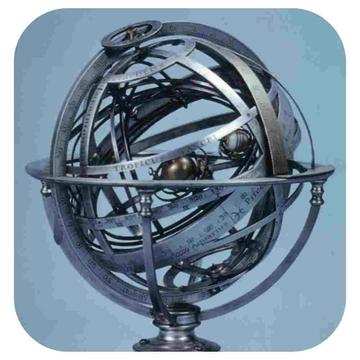
This armillary sphere illustrates the Copernican planetary theory, where the sun in the centre our universe, not Earth (how it was believed before in the Ptolemaic theory).
This little, but elegant sphere was made from brass and silver with minimalistic engraving of the zodiac symbols, planets and stars.
A large golden sphere represents the Sun, and small white sphere represents the Earth.
This model not only symbolises a huge revolution in the scientific world and our civilisation, but how one person with strong convictions and beliefs could change world.
Meet Dhamyaa Abbas
[MultakaOxford] changed my life … and it changed many, many things in my heart.
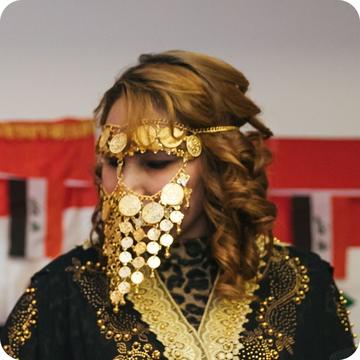
Volunteer Dhamyaa Abbas at the Multaka One World Festival
Dhamyaa Abbas arrived in Oxford from Iraq in 2017, joining MultakaOxford as a volunteer in 2018.
At the time, she didn’t speak English but the MultakaOxford programme and tour guide training gave her the opportunity to practise.
I enjoyed leading the tours in English and loved showing visitors the objects from Iraq, Sudan, and Arabic culture
Dhamyaa became more involved in MultakaOxford, running a series of popular fashion shows, featuring dress from around the world, to encourage inter-cultural understanding.
The MultakaOxford programme gave Dhamyaa the confidence to continue her English training at City of Oxford College and to explore further education.
She has now completed a Teaching Assistant course and works as a Teaching Assistant in Oxford primary schools.
Dhamyaa continues to bring her knowledge and experience to Oxford University museums — she volunteers at the Ashmolean Museum's Welcome desk.
https://www.youtube.com/embed/pMnNU5hHxCY
[MultakaOxford] supported my language training and encouraged me towards other education ...
[it] introduced me to so many people and cultures and made me feel part of a community.
And if I ever missed my country, the project gave me the opportunity to speak about it and my family.
Meet Hussein Kara Ahmed
People here respect my language, respect where I come from. They like to hear about different cultures, and that’s been very encouraging. It has really helped me to feel part of this community.
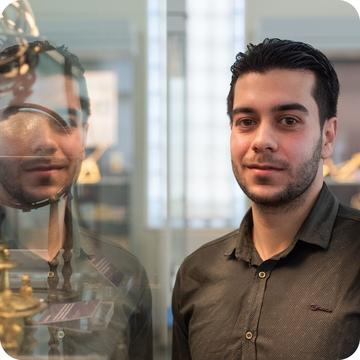
Former MultakaOxford volunteer Hussein Kara Ahmed now works at the Ashmolean museum
Before coming to Oxford in 2018, Hussein Kara Ahmed worked in an embroidery factory in Turkey.
Three years before that, he was living in Syria, preparing to study law at university, but was forced to leave the country.
Shortly after arriving in Oxford, a contact at a local community organisation suggested he might like to get involved in MultakaOxford.
After eight months of volunteering, Hussein felt confident enough to apply for a job. He now works part-time as a Visitor Services Assistant at the Ashmolean Museum.
Hussein saw how the project fostered a sense of intercultural understanding between those visiting the museums and those volunteering in them.

